I am very impressed by We Are. It is an intuitive tool useful for creating safety training. The visuals are great and the possibilities even bigger. I truly recommend We Are Learning.”

Mia Barrett
Director of Education at dfusion
We hand you the characters, the tools, the scenes, and the interactivity. You bring the Story to life.
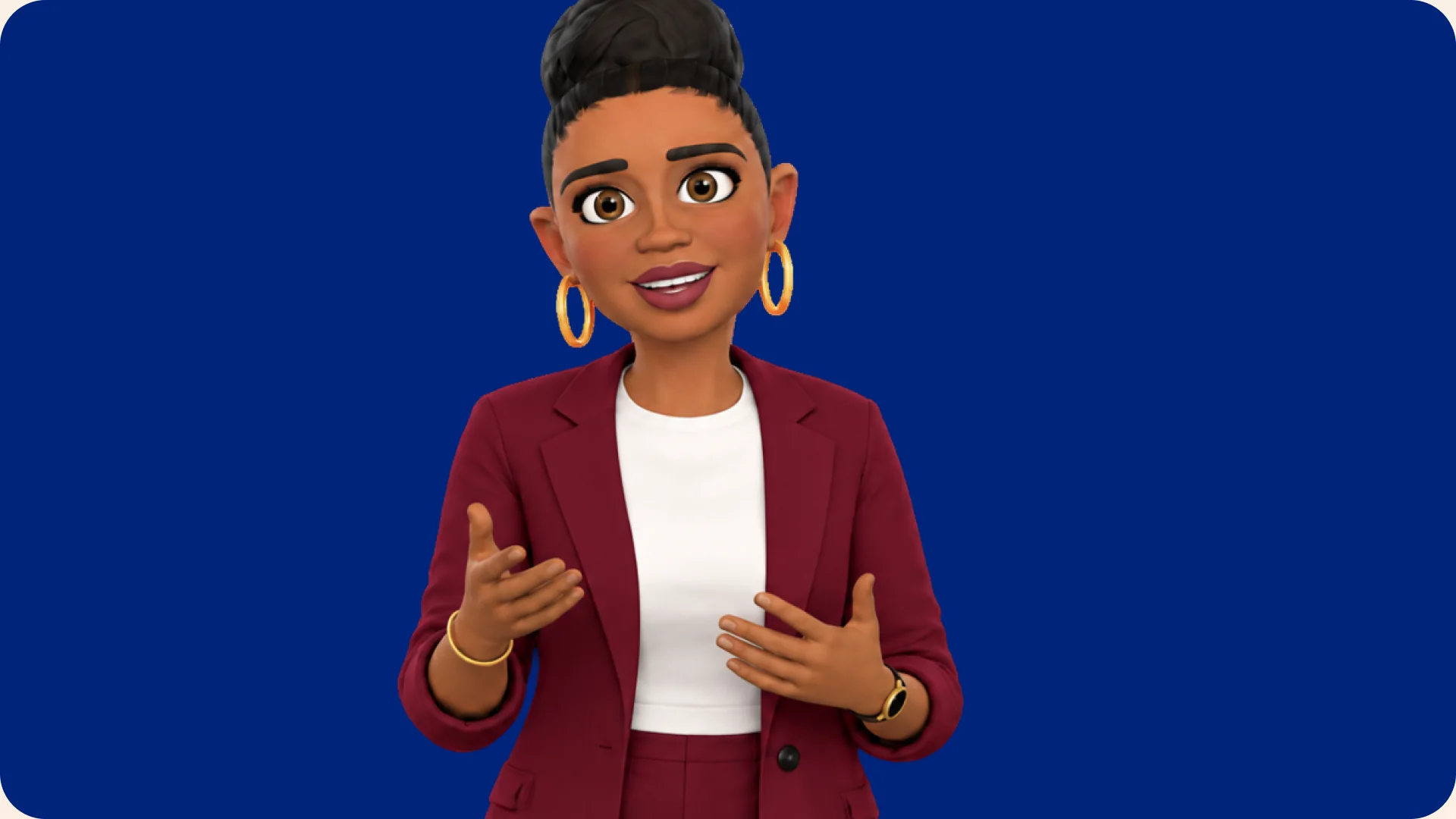
The principles behind immersive learning, and the tools in We Are that put them into practice.
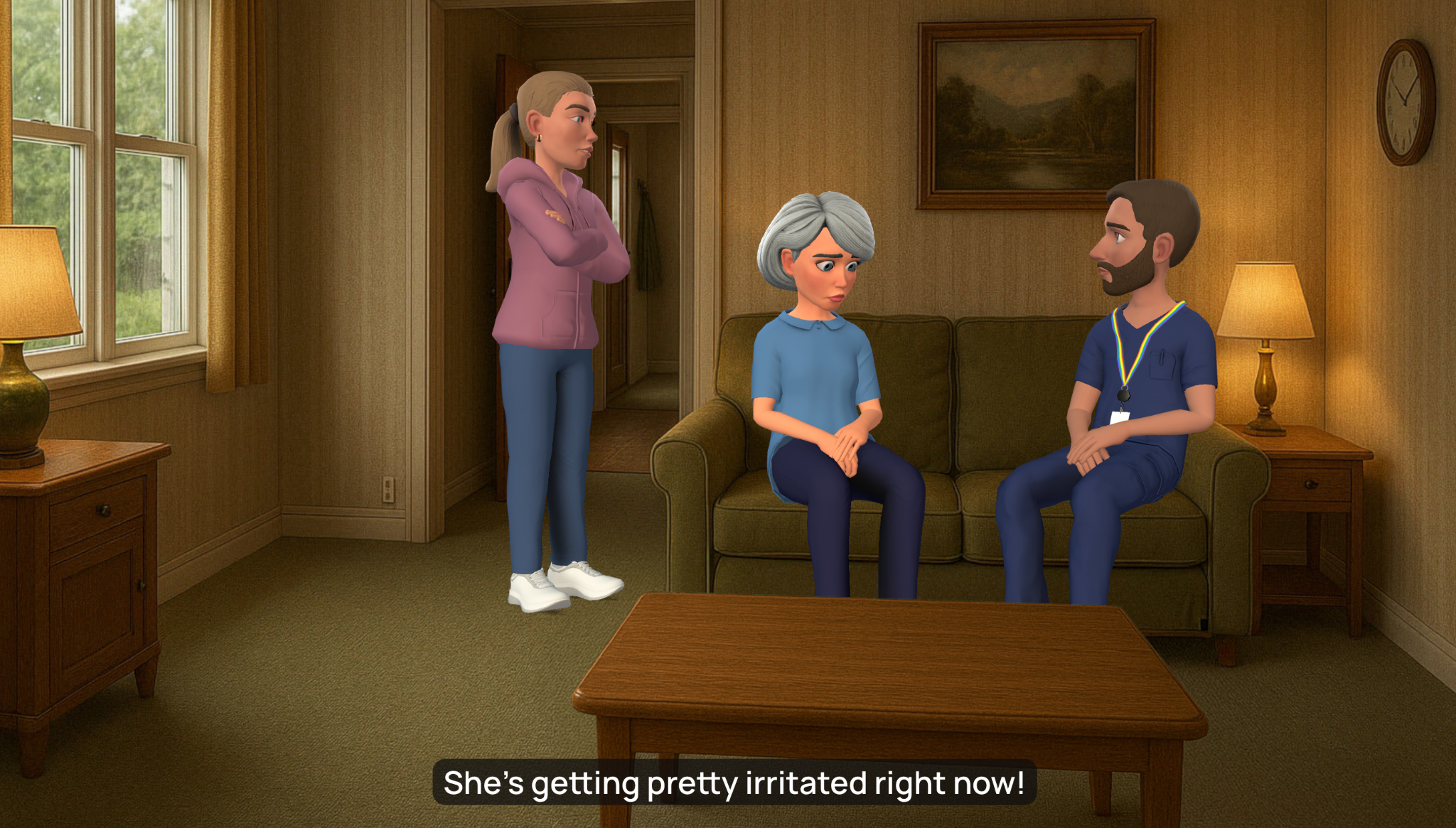
Skip the list of learning objectives. Open with a character, a dilemma or a question, so learners think “I want to keep going”, not “I have to finish this”.
Skip the list of learning objectives. Open with a character, a dilemma or a question, so learners think “I want to keep going”, not “I have to finish this”.
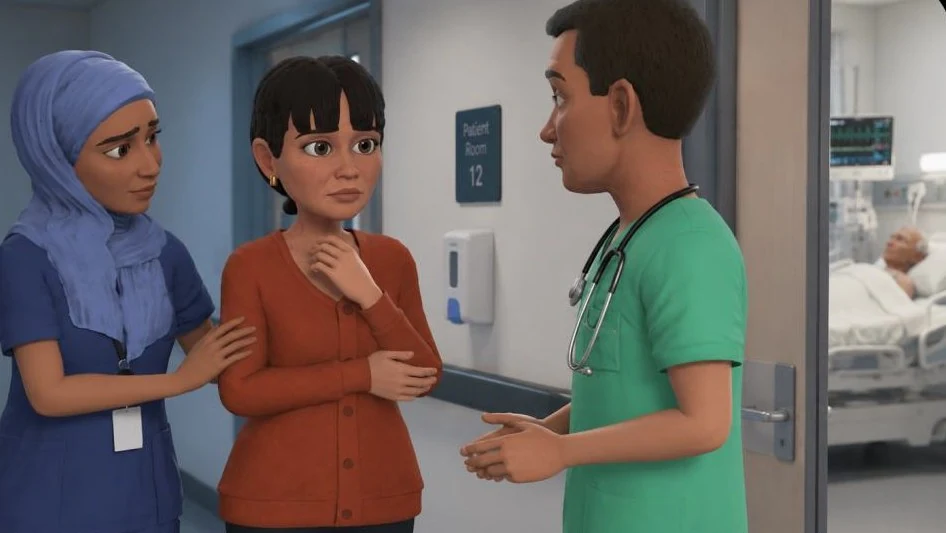
Please tell me… is my father going to be okay?
Show who is affected, what is at stake and how it feels. Expressive characters in realistic scenes help learners connect, not just take in facts.
Show who is affected, what is at stake and how it feels. Expressive characters in realistic scenes help learners connect, not just take in facts.
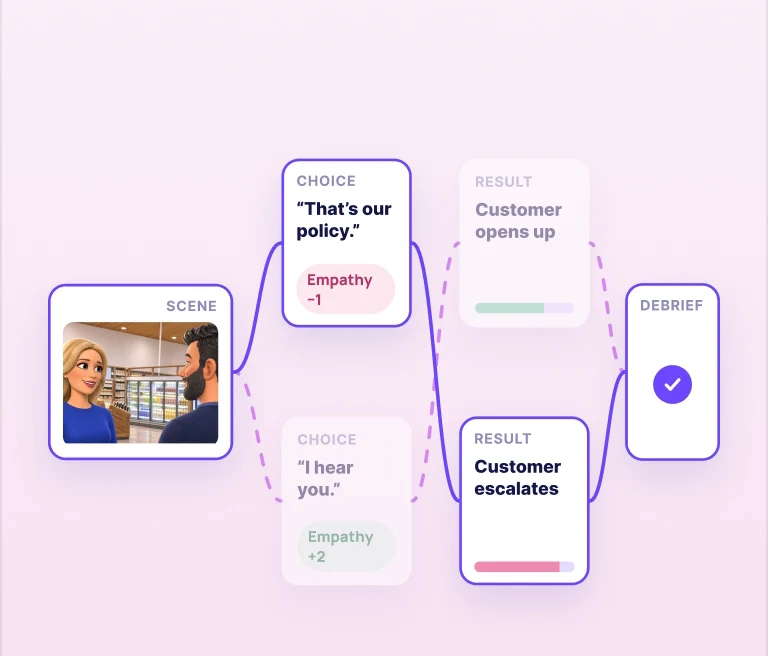
Branching scenarios add time pressure, uncertainty and consequences, so learners practise the decisions they face at work.
Branching scenarios add time pressure, uncertainty and consequences, so learners practise the decisions they face at work.

Turn any image into something to explore with Hotspots: reveal, play or jump to another node. Need more? Describe a simulation, game or tool and drop it in with the Code Node.
Turn any image into something to explore with Hotspots: reveal, play or jump to another node. Need more? Describe a simulation, game or tool and drop it in with the Code Node.
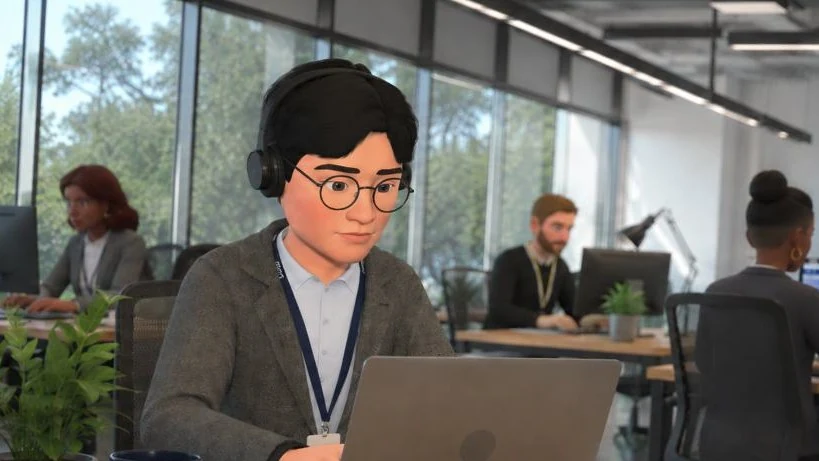
Blend in any media. Add scrolling page, carousels, rich text, images, videos, flashcard, and more. Let your learners interact with their environment.
Blend in any media. Add scrolling page, carousels, rich text, images, videos, flashcard, and more. Let your learners interact with their environment.

Draft scripts, scenarios and dialogue in minutes with the AI Script Assistant. Or upload your PPTs, PDFs, and DOCs to generate your Story. Bring relatable presenters to connect with your learners.
Draft scripts, scenarios and dialogue in minutes with the AI Script Assistant. Or upload your PPTs, PDFs, and DOCs to generate your Story. Bring relatable presenters to connect with your learners.
I am very impressed by We Are. It is an intuitive tool useful for creating safety training. The visuals are great and the possibilities even bigger. I truly recommend We Are Learning.”

“Thanks to the Script Assistant in We Are, I was able to create a complete e-learning course in just a few hours. The content generated was of high quality and practical value. All this saved me several days (maybe even weeks) of work.”


“I am very impressed by We Are. It is an intuitive tool useful for creating safety training. The visuals are great and the possibilities even bigger. I truly recommend We Are Learning.”


+40% from idea to launch
90.7% average test score
3 weeks from idea to launch


Immersive learning is about creating experiences that capture attention, engage emotions, and make learners active participants rather than passive observers. It’s not about technology, but about a state of mind — much like getting completely absorbed in a great book, movie, or game.At We Are Learning, we bring this to life through interactive, scenario-based Stories with relatable 3D characters and realistic situations. Learners face challenges, make decisions, experience consequences, and reflect on their choices.By practicing real-world situations in a safe environment, learners build experiences they can remember and draw on when similar situations arise at work.Because knowing what to do is one thing. Having experienced doing it is something else.
No. Immersive learning with We Are Learning needs no VR headset, controller, or special hardware. Stories run in up-to-date web browsers on computers and tablets, and on phones through the We Are Learning app for iOS and Android. That makes interactive training easier to roll out across locations and teams, on devices employees already use.No. Immersive learning isn’t about technology. It’s about designing learning experiences that capture attention, engage emotions, and make learners feel part of what’s happening. Immersion is a state of mind, not a technology. And you don’t need a VR headset to get there.At We Are Learning, we create immersive experiences in different ways. Through interactive Stories with relatable 3D characters and realistic scenarios where learners make decisions and experience the consequences. Or through hands-on activities where learners interact with objects, explore 3D models, and practice tasks like assembling a machine, step by step.What matters isn’t the technology itself, but how actively involved the learner becomes in the experience.And there’s no need for special equipment. Learners can access these experiences through web browsers on computers and tablets, or through the We Are Learning app on iOS and Android. That makes immersive learning easy to deliver and scale, using devices people already have.
A learning experience becomes immersive when learners are so involved in what’s happening that they feel part of the experience, rather than just watching or receiving information.It starts with capturing attention, engaging emotions, and giving learners something meaningful to do. That could mean making decisions in a realistic scenario, interacting with 3D objects, solving problems, or practicing a hands-on task like assembling a machine.At We Are Learning, we combine storytelling, relatable 3D characters, realistic situations, and interactive experiences to make this happen. Learners take action, see the consequences, and learn through experience.The technology helps create the experience. But it’s the attention, emotions, and active involvement that make it immersive.
Traditional eLearning mostly presents information through text, slides, and videos, while immersive learning also lets learners use that information in a realistic situation. Instead of only reading about how to handle a difficult conversation, learners choose a response, see how the conversation develops, and reflect on their approach. Information and practice work together in the same experience.Traditional eLearning often focuses on presenting information through text, slides, videos, and quizzes. Immersive learning goes a step further by getting learners actively involved in the experience.Instead of just reading about how to handle a difficult conversation, learners find themselves in one. They make decisions, experience the consequences, and reflect on what happened. Or instead of watching a video explaining how to assemble a machine, they get to practice assembling it themselves through an interactive simulation.Both approaches have their place. But knowing what to do is one thing. Having experienced doing it is something else.That’s what immersive learning adds: the opportunity to turn information into experience, helping learners apply what they’ve learned in real life.
Scenario-based learning is one of the most effective ways to create immersive learning experiences. By placing learners in realistic situations where they need to think, make decisions, and experience the consequences, we can capture their attention, engage their emotions, and make them active participants.At We Are Learning, we bring this to life through interactive Stories with relatable 3D characters, meaningful choices, and branching conversations. Learners aren’t just watching a situation unfold. They’re part of it, influencing what happens next.And that’s where learning happens. Through decisions, consequences, feedback, and reflection, learners build experiences they can remember and draw on in real life.Because the goal isn’t just to know what to do. It’s to be better prepared when it actually happens.
Immersive learning helps employees apply knowledge by letting them practice in situations that resemble their real work. They can rehearse a customer conversation, respond to a safety concern, or try giving constructive feedback before facing the real thing. Relevant scenarios, clear feedback, and the chance to try again connect training content to the decisions employees make on the job.
Emotional engagement matters because people pay more attention when they recognize the situation and understand what’s at stake. Relatable characters bring a human perspective to training, making tone, hesitation, frustration, and empathy part of the experience. In We Are Learning, characters turn abstract guidance into conversations learners can see from different perspectives, so they reflect on both what they say and how they say it.
Common examples of immersive learning in the workplace include onboarding, customer service, sales, leadership, health and safety, and technical training. A new employee might explore a workplace routine through hotspots, a retail associate might practice responding to a complaint, and a manager might navigate a sensitive feedback conversation. In We Are Learning, you combine character-led scenarios, videos, quizzes, and open responses to fit each learning objective.
Yes. In We Are Learning, branching scenarios create different paths based on each learner’s choices. A response can lead to a follow-up question, a different character reaction, or another outcome. Open responses with AI feedback let learners explain their thinking in their own words and get feedback on it. How the experience adapts depends on the paths and interactions your team builds in.
It doesn’t have to be. Animated training traditionally required a production studio, specialist skills, and long timelines. We Are Learning builds animation and production tools into the authoring process, so your own team can create immersive scenarios in-house. Ready-made 3D characters, built-in animation, and AI-assisted authoring mean you don’t start from scratch. Time and cost still depend on your content’s scope and complexity.
Yes. With We Are Learning, your team builds interactive Stories without writing code or animating characters by hand. Choose ready-made 3D characters, write the dialogue, and connect branching paths on a visual Node Map. Script Assistant can help draft scripts and content. Your team brings the subject knowledge and learning goals; the tool handles the animation and production.
Yes. Upload existing PPT, PDF, and DOC files as the starting point for an immersive learning experience in We Are Learning. Build on that content with character-led conversations, branching scenarios, quizzes, hotspots, and open responses. For example, a customer service guide can become a conversation learners practice navigating. Your team reviews and shapes every interaction so it supports your learning goals.
Export Stories from We Are Learning as SCORM or xAPI packages for delivery through a compatible LMS, or share them with a direct web link or an embed on any webpage. Learners open them in web browsers on computers and tablets, or through the We Are Learning app on phones. That lets you add immersive learning to your existing training setup.
We provide the tool. You imagine it.
Create learning that is anything but boring
Roleplay
Branching scenarios
3D characters
Upload PPT, PDF, DOCs
Quizzes
Hotspots
SOC2
Multiple languages
Branding and customization
AI video
SCORM
LMS
URL
Embed
Image to video
Talking avatars
Prompt AI assistant
Write your script