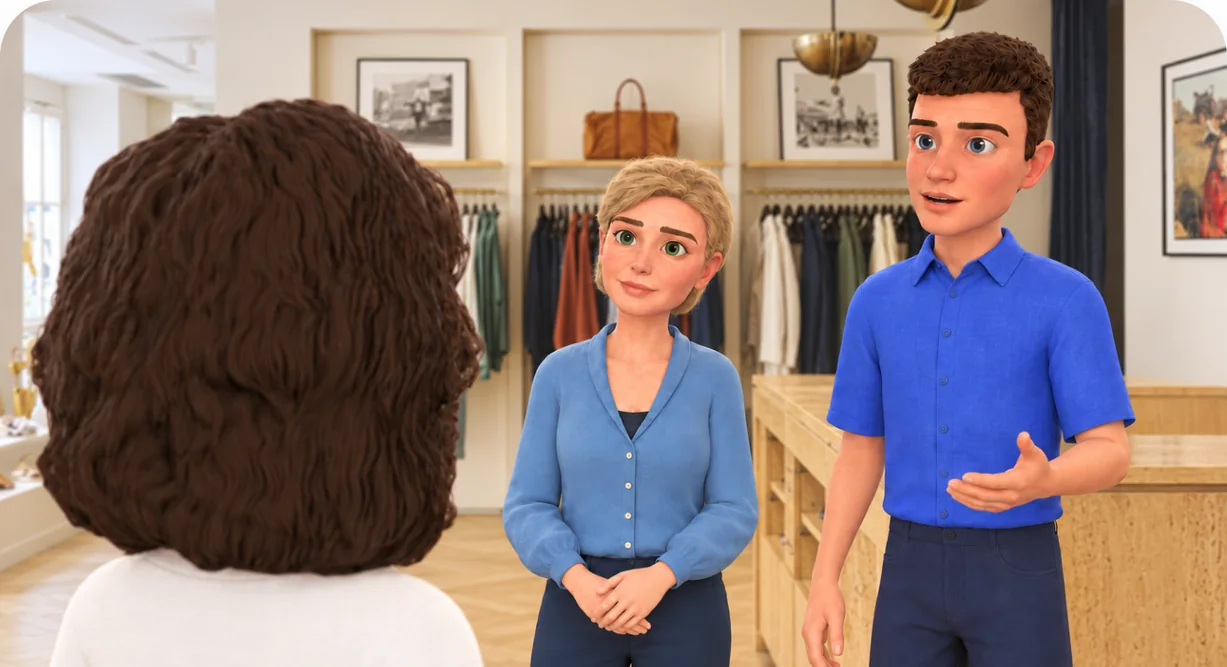
Customer experience and sales
Associates practice greetings, open-ended questioning, building rapport, handling hesitations, and closing sales.
Higher conversion rates and elevated net promoter scores (NPS).
Create immersive, emotionally engaging training that
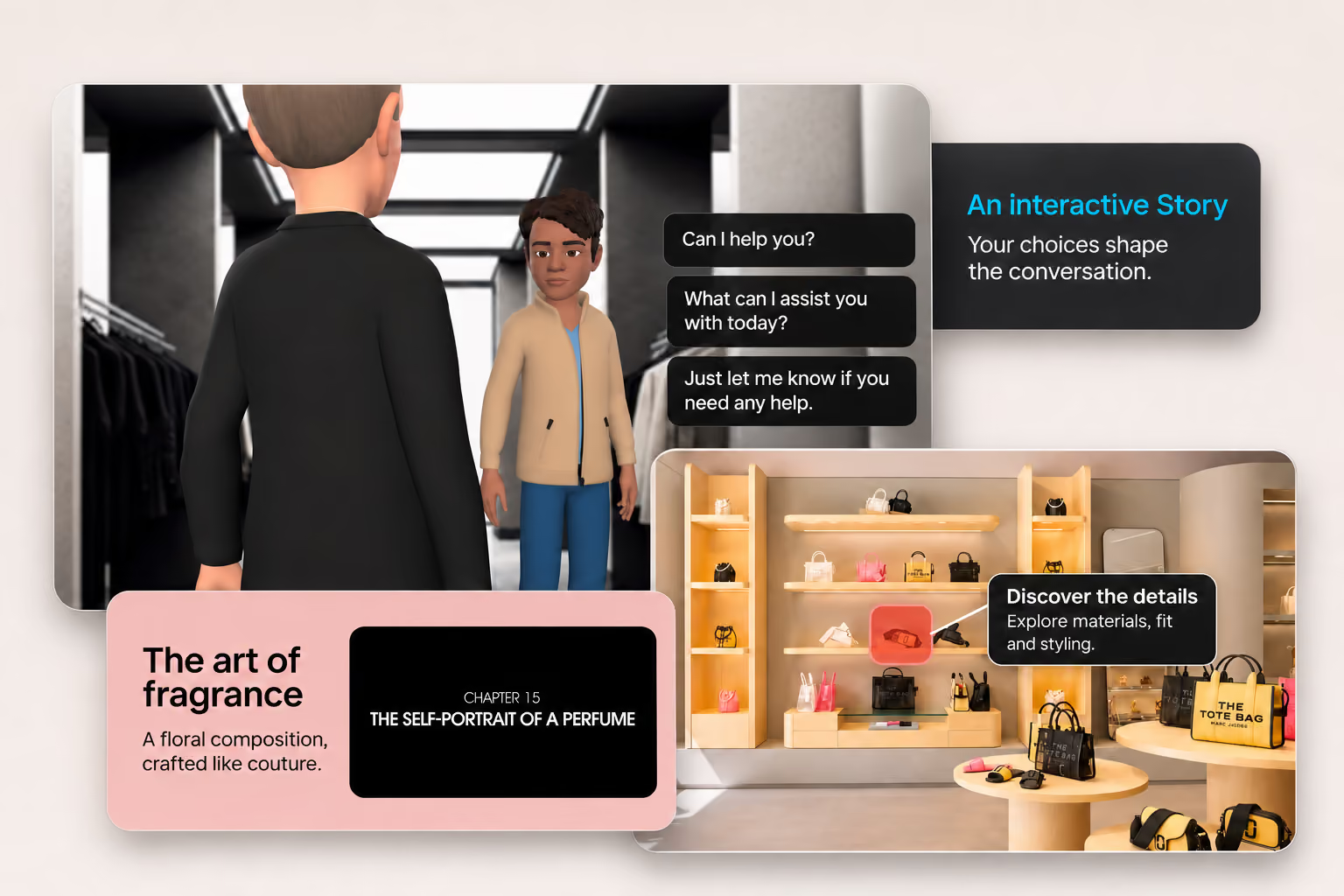




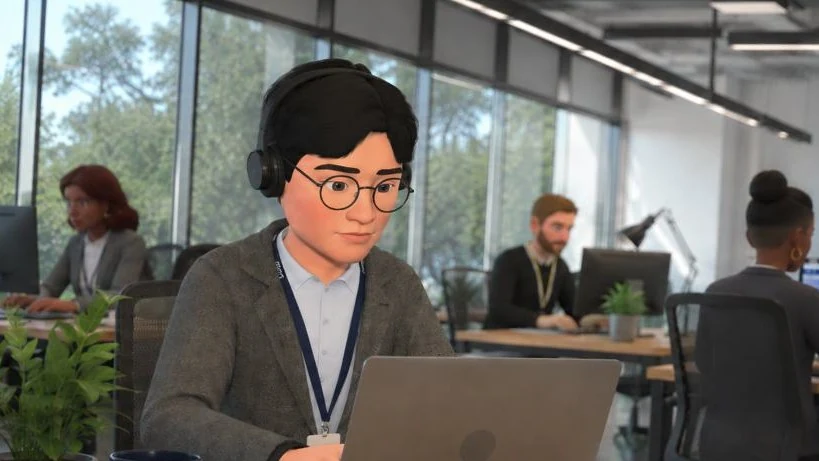
Transform passive training into practice-based scenarios that look and feel like your own stores and workspaces, with custom characters and your full brand kit built in.
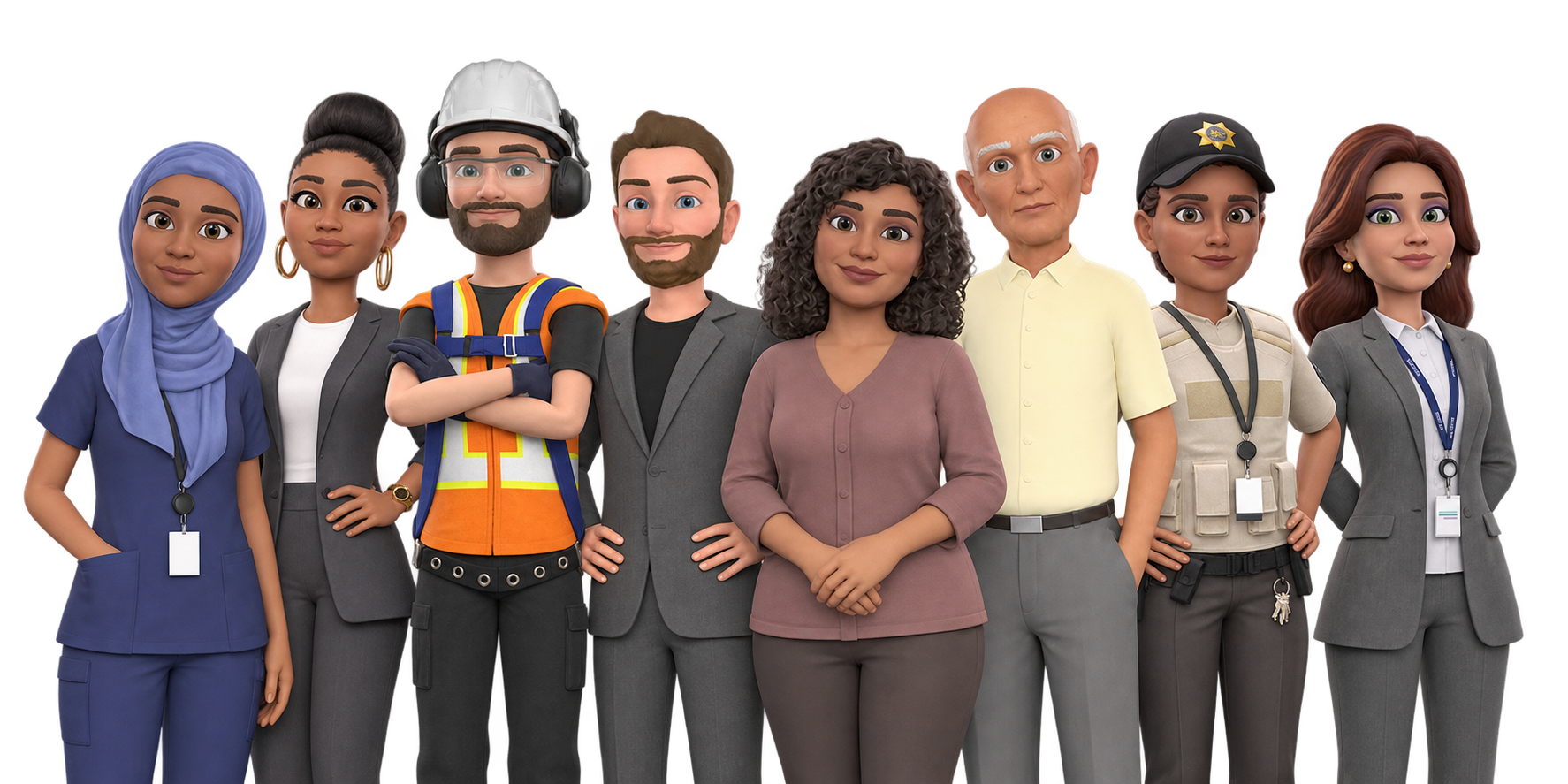
An open library of industry-ready 3D characters, created by professional artists, animators, and designers to replicate real-world store environments. Deploy realistic cashiers, floor managers, and delivery drivers into your next module.
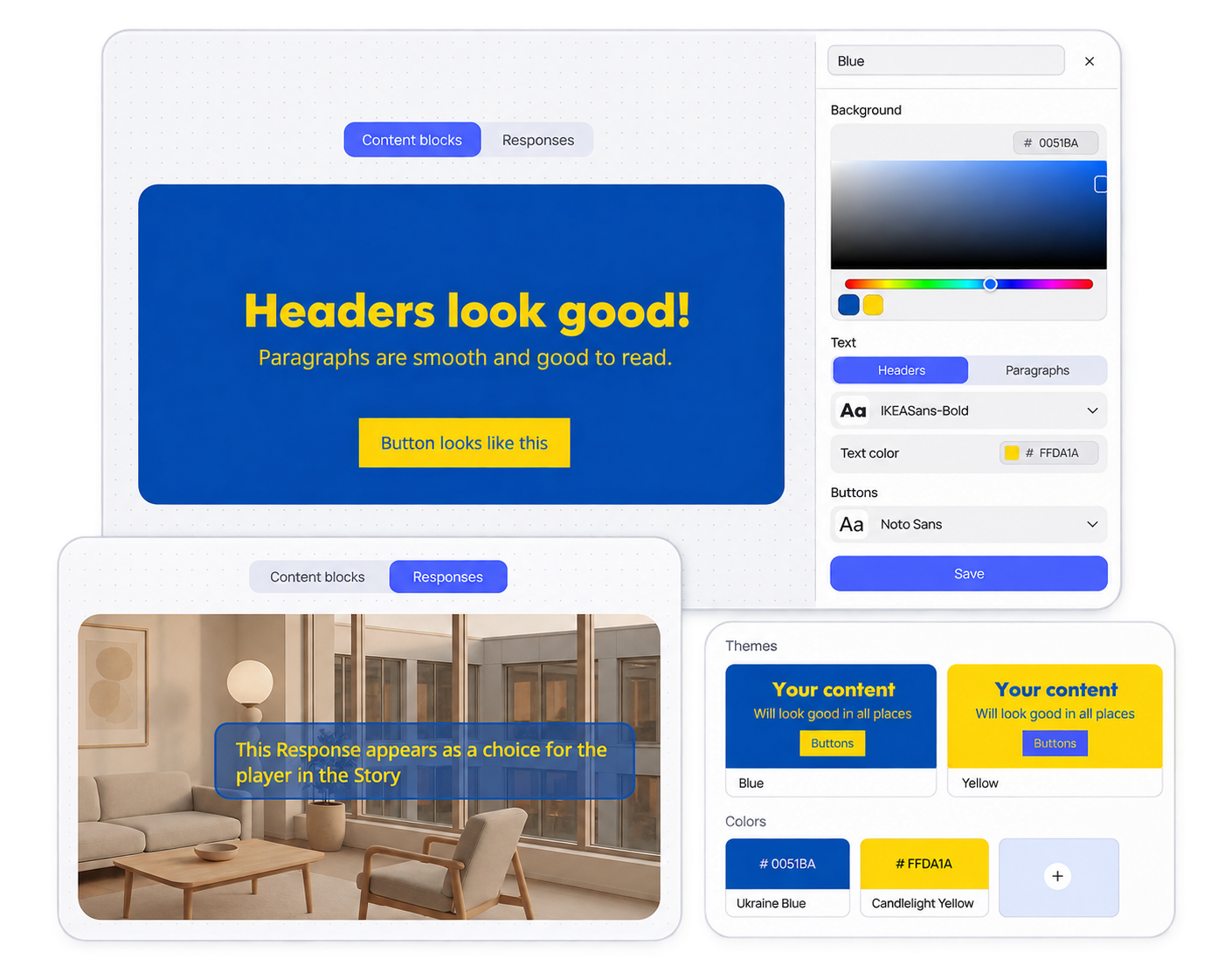
Upload your company fonts, custom color palettes, brand assets, and logos to keep your learning designs aligned with your corporate identity.
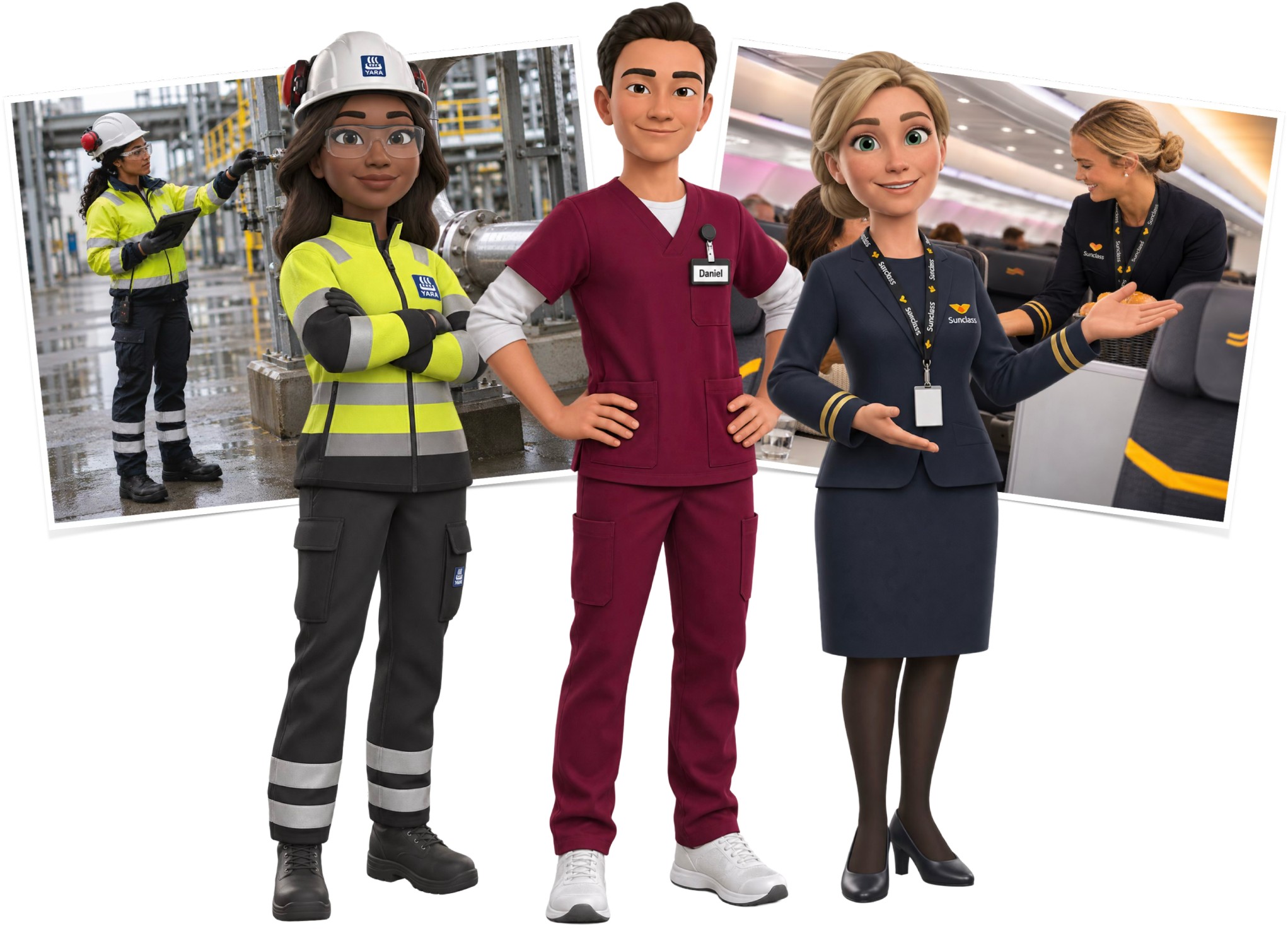
Tailored to your specific workforce, ensuring your avatars wear your exact corporate uniforms, display your logo, and stay 100% true to your brand identity.
Associates practice greetings, open-ended questioning, building rapport, handling hesitations, and closing sales.
Higher conversion rates and elevated net promoter scores (NPS).

Staff navigate realistic buyer objections and learn to suggest relevant product pairings interactively.
Increased average basket size and higher units per transaction (UPT).
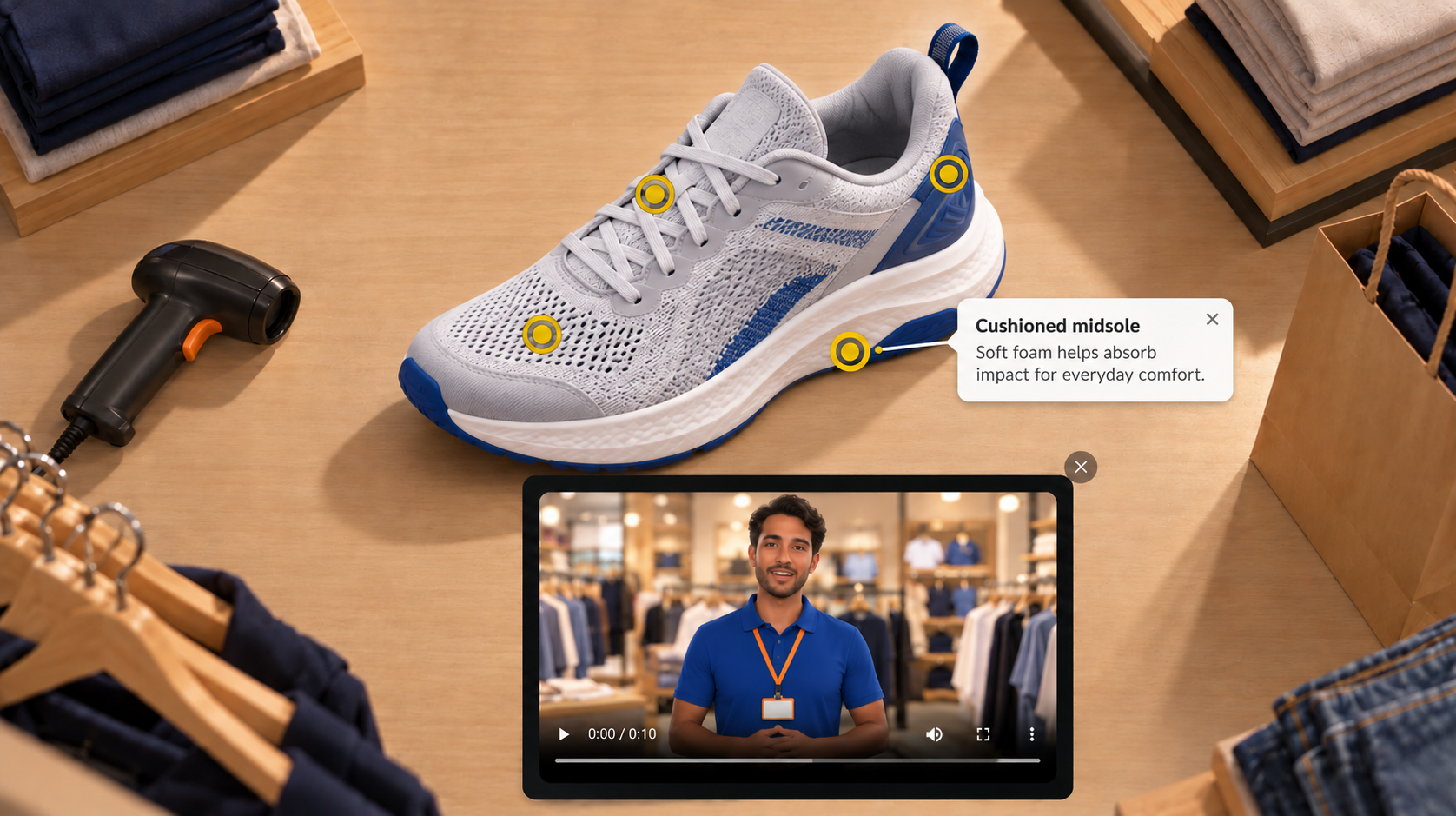
Associates explore complex product assortments, features, and benefits across electronics, cosmetics, or apparel.
Confident staff who can simplify technical features for shoppers.

New hires complete store orientation, opening/closing routines, and customer service standards before day one.
Accelerated time-to-productivity and reduced early associate churn.
With We Are, your instructional designers can do it all themselves. Your team's imagination, store expertise, and instructional knowledge become the core powerhouses of the design process.
Built-in AI co-pilot—like our intelligent Script Assistant—help you instantly generate dialogue structures, turn existing training PDFs or store briefs into interactive story paths, and deploy fully realized 3D scenarios in hours instead of months.
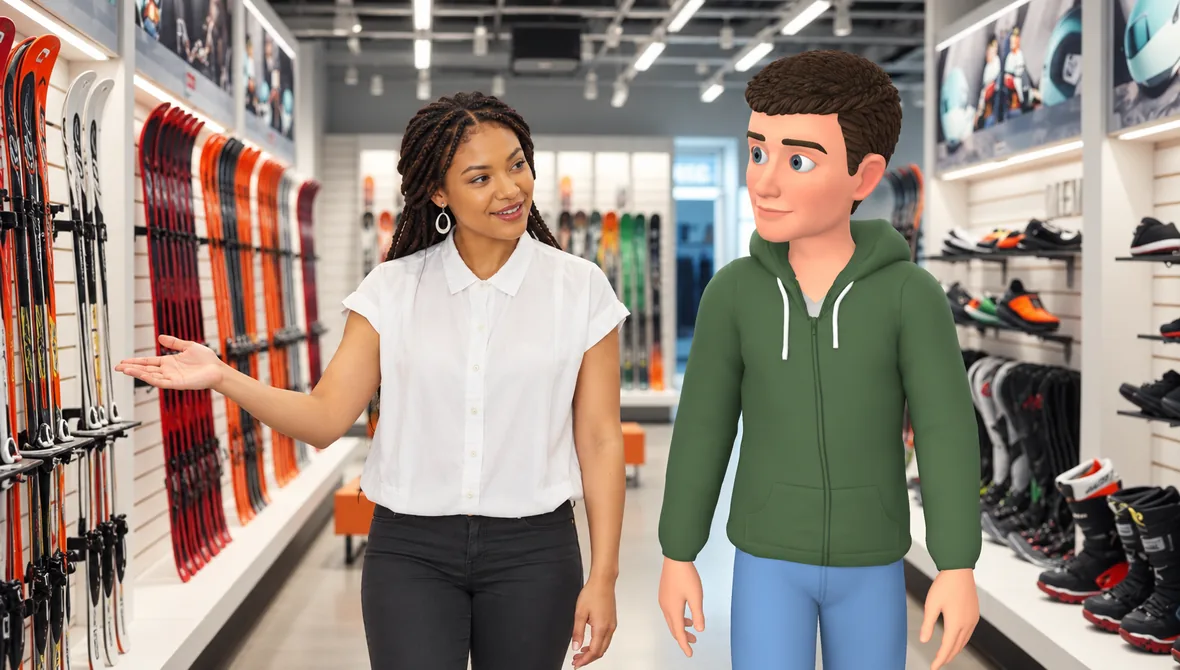
Training works best when store associates see themselves in the scenarios. We Are provides diverse, relatable 3D characters featuring natural gestures, realistic expressions, and customizable voices that help learners emotionally connect with the training.
You can choose instantly from our library of pre-built store personas, or use the AI Studio to turn a simple image into a talking avatar—giving you the power to put familiar faces, brand ambassadors, or specific team styles directly onto the digital storefront.
Deliver consistent training with minimal logistical friction. With We Are you can export high-fidelity interactive stories directly into SCORM or xAPI formats that drop seamlessly into your existing LMS. Alternatively, share instantly via web URL or embed code so store associates can practice on mobile devices or store tablets.
Your content can be seamlessly made available in multiple languages—allowing you to auto-translate audio and dialogue paths instantly while maintaining consistent brand and service standards worldwide.
See how We Are fits your retail training.
The principles behind immersive learning, and the tools in We Are that put them into practice.
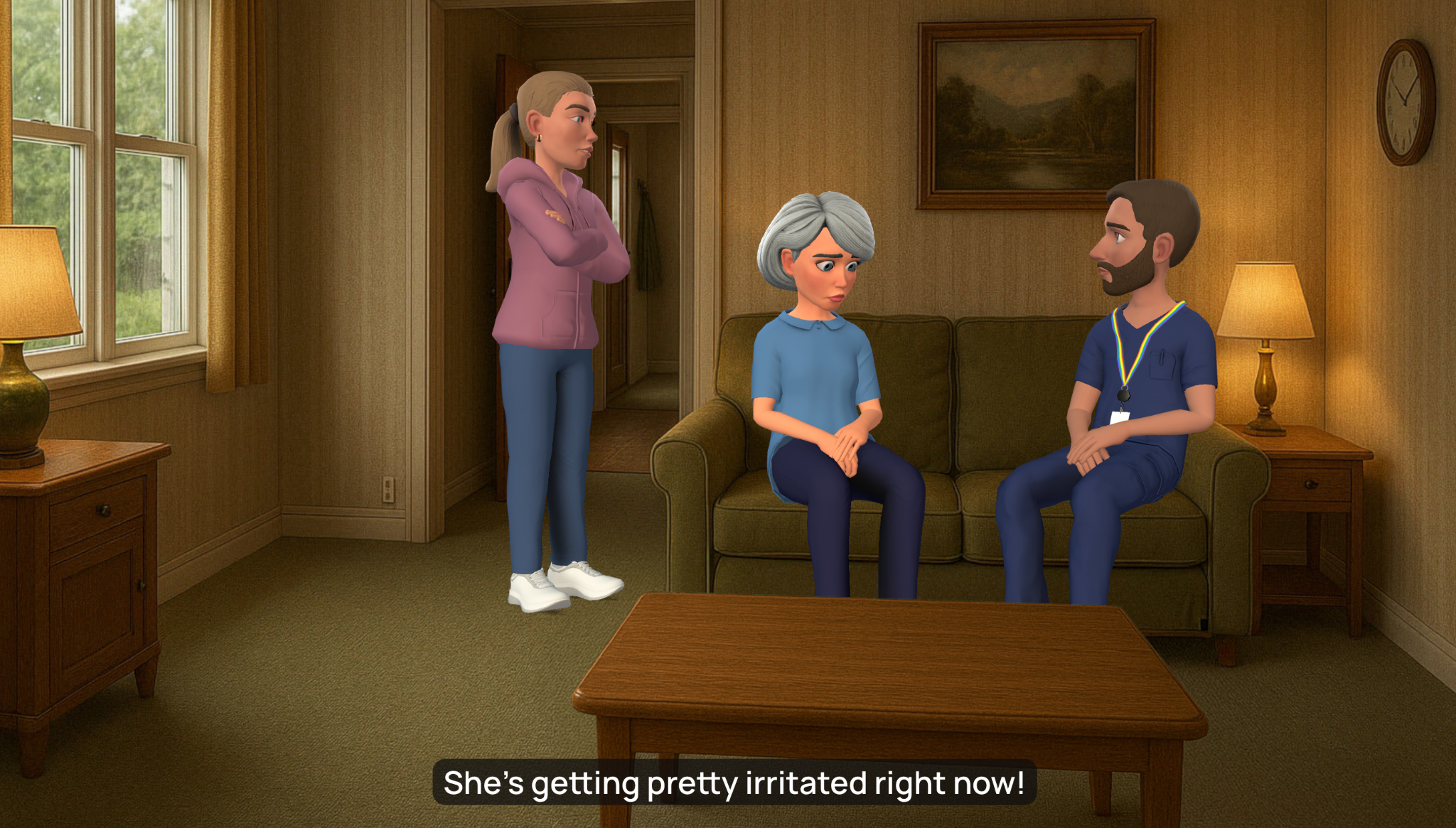
Skip the list of learning objectives. Open with a character, a dilemma or a question, so learners think “I want to keep going”, not “I have to finish this”.
Skip the list of learning objectives. Open with a character, a dilemma or a question, so learners think “I want to keep going”, not “I have to finish this”.
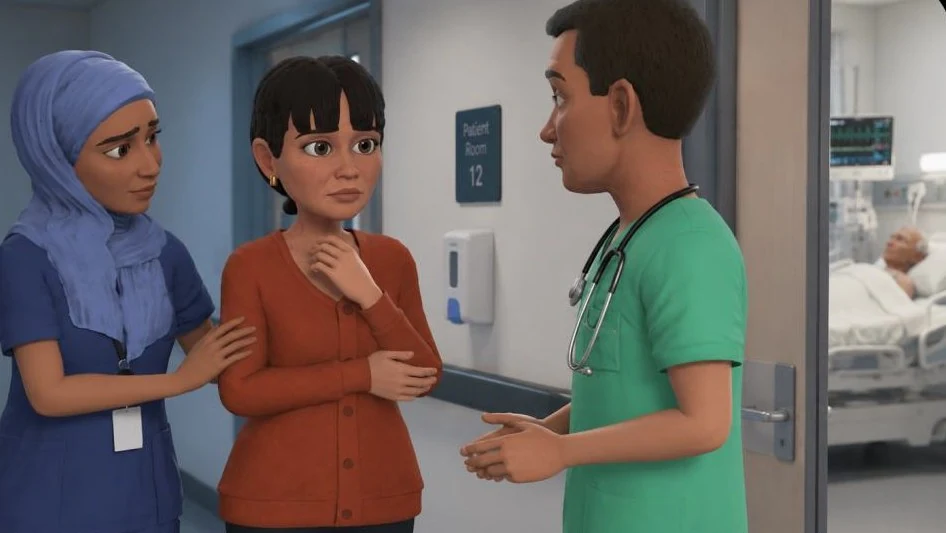
Please tell me… is my father going to be okay?
Show who is affected, what is at stake and how it feels. Expressive characters in realistic scenes help learners connect, not just take in facts.
Show who is affected, what is at stake and how it feels. Expressive characters in realistic scenes help learners connect, not just take in facts.
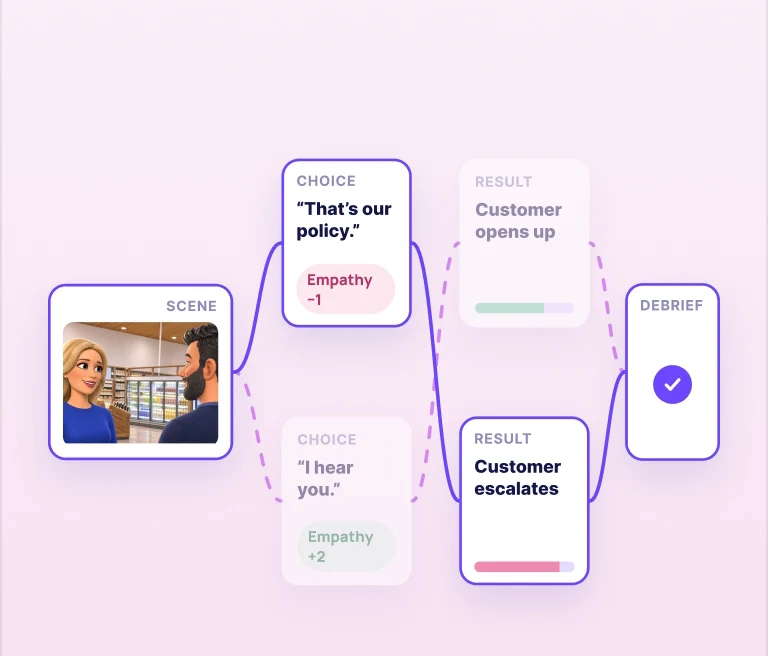
Branching scenarios add time pressure, uncertainty and consequences, so learners practise the decisions they face at work.
Branching scenarios add time pressure, uncertainty and consequences, so learners practise the decisions they face at work.

Turn any image into something to explore with Hotspots: reveal, play or jump to another node. Need more? Describe a simulation, game or tool and drop it in with the Code Node.
Turn any image into something to explore with Hotspots: reveal, play or jump to another node. Need more? Describe a simulation, game or tool and drop it in with the Code Node.
Blend in any media. Add scrolling page, carousels, rich text, images, videos, flashcard, and more. Let your learners interact with their environment.
Blend in any media. Add scrolling page, carousels, rich text, images, videos, flashcard, and more. Let your learners interact with their environment.

Draft scripts, scenarios and dialogue in minutes with the AI Script Assistant. Or upload your PPTs, PDFs, and DOCs to generate your Story. Bring relatable presenters to connect with your learners.
Draft scripts, scenarios and dialogue in minutes with the AI Script Assistant. Or upload your PPTs, PDFs, and DOCs to generate your Story. Bring relatable presenters to connect with your learners.
“For the past year, we’ve been using We Are to design our training. We Are Learning has brought us a new, fun, interactive way of learning. I really appreciate is that the We Are team continuously develops and improves their product, which shows they truly listen to their users.”

“I am very impressed by We Are. It is an intuitive tool useful for creating safety training. The visuals are great and the possibilities even bigger. I truly recommend We Are Learning.”

“Using We Are has transformed the way that we build stories into our learning, providing a quick easy way to bring scenarios to life with engaging Characters.”



Scenario-based learning is a training method where retail employees practice real shop-floor situations by making decisions and seeing the consequences. Instead of only reading instructions or watching a video, associates choose how to respond and explore what happens next. With We Are Learning, you build interactive Stories with relatable 3D characters, branching conversations, and feedback, so staff can practice before serving real customers.
You can create retail training for customer service, sales conversations, upselling and cross-selling, product knowledge, and employee onboarding. Build learning around the moments that matter in your stores, from explaining a new collection to handling a return request. Combine character-led scenarios with videos, quizzes, hotspots, and open responses so employees explore information and put it into practice.
Use interactive scenarios to let associates rehearse everyday customer interactions, such as greeting a shopper, understanding their needs, explaining store policies, or handling a complaint. Learners choose how to respond and see how each decision changes the conversation. Branching paths show different outcomes, and feedback helps them reflect on their approach before similar situations happen on the shop floor.
Yes. You can build customer service scenarios where associates practice challenging conversations in a safe environment. For example, a customer might ask to return an item outside your policy, or get frustrated about an out-of-stock product. Create different conversation paths so employees practice listening, explaining their options, and knowing when to involve a manager, all based on your own service standards.
Scenario-based sales training gives associates a safe place to practice making relevant recommendations. Learners identify a customer’s needs, suggest a suitable upgrade or complementary product, and respond when the customer hesitates. Different paths show how timing, questions, and product relevance shape the outcome, helping employees build an upselling and cross-selling approach that puts the customer’s needs first.
Make product knowledge training more engaging by connecting product information to the moments employees actually use it. With We Are Learning, you can combine images, videos, hotspots, and quizzes with customer scenarios. Associates explore product features, compare options, and then practice explaining the benefits to a shopper, giving product knowledge a practical purpose beyond memorizing specifications.
Yes. You can create interactive retail onboarding that introduces new and seasonal employees to your store, service standards, products, and daily routines. Scenarios let newcomers rehearse common customer interactions, while quizzes and hotspots help them explore essential information. Share the training before their first shift, or use it alongside store orientation, shadowing, and hands-on practice.
Yes. Upload your existing PPT, PDF, and DOC files, such as store guides, product sheets, or onboarding materials, as the starting point for an interactive Story. Script Assistant, our AI-assisted authoring tool, helps turn that material into a structured script, and you add scenarios, quizzes, and hotspots. Your team reviews every scene for accuracy and alignment with your training goals.
Yes. The We Are Learning brand kit lets you apply your company fonts, colors, logos, and brand assets to your training. Build scenarios around your store context using ready-made 3D characters. For more specific needs, we can create custom avatars wearing your corporate uniforms and logo, so employees recognize their own workplace in the training.
Yes. No VR headsets or special hardware are needed. Interactive Stories run in up-to-date web browsers on computers and tablets, and on phones through the We Are Learning app for iOS and Android. Deliver training through your existing LMS, share it with a web link, or embed it in a page your employees already use.
Yes. Create training around shared products, procedures, and service standards, then roll it out across all your retail locations. Built-in translation lets you publish the same Story in multiple languages, so every team can learn in a language they understand. Your team can review translations and adapt examples or policies to local requirements.
Yes. You can export Stories as SCORM or xAPI packages for delivery through a compatible learning management system, adding interactive retail training to your existing setup. You can also share Stories through a direct web link or embed them in other pages, depending on how you want employees to access the training.
Make your training matter
Create learning that is anything but boring
Roleplay
Branching scenarios
3D characters
Upload PPT, PDF, DOCs
Quizzes
Hotspots
SOC2
Multiple languages
Branding and customization
AI video
SCORM
LMS
URL
Embed
Image to video
Talking avatars
Prompt AI assistant
Write your script