The tools might change, but the goal remains the same: helping people grow, learn, and perform better.

David Kelly
L&D Executive; Former Chairman and CEO of The Learning Guild
Performance. Productivity. Results. That’s the language business leaders care about. But is everyone in L&D fluent… or do we sometimes get stuck in “learning-speak”? In this guest piece, David Kelly, with over 2 decades in L&D leadership, makes the case for going bilingual — helping learning professionals connect great instructional design with business performance. David breaks it all down for you here.

The tools might change, but the goal remains the same: helping people grow, learn, and perform better.
During my recent conversation with Stine Snekkenes exploring the evolving role of L&D, one idea kept coming up again and again: Sometimes there’s a gap between how learning professionals describe their work and how the rest of the business understands it.
We speak in terms like “learning outcomes,” “engagement,” and “instructional design.”
We know those things are essential. But our stakeholders? They’re usually tuned into performance, productivity, and results.
That doesn’t mean they don’t value learning; it means they value what learning enables. And if we want to be seen as strategic partners (not order takers), we have to start speaking their language.
Let’s be clear: Pedagogy matters. Good instructional design, grounded in how people actually learn, is foundational to the work we do. But, too often, we treat pedagogy like the goal when really, it’s the engine that gets us to the goal.
The shift happening in L&D right now isn’t about abandoning learning theory. It’s about connecting it more directly to performance.
If your course is beautifully designed, but no one uses what they learned? That’s not a win. If your simulation is wildly engaging but doesn’t move the needle on behavior or business outcomes? That’s a missed opportunity.
When I speak to organizations about their learning strategies, I often share something that often makes people uncomfortable:
“Most organizations don’t really care about learning. They care about what learning helps people do.”
It sounds harsh, but it’s actually freeing. It clarifies what success looks like.
Different stakeholders define “working” in different ways:
None of them are asking if the instructional strategy was sound or if the learning objectives were aligned to Bloom’s Taxonomy.
They want outcomes, not outputs.
Our job isn’t just to design effective learning experiences. It’s also to translate those experiences into a language the business understands and values.
That might mean:
Here’s a quick shift in vocabulary that can help:
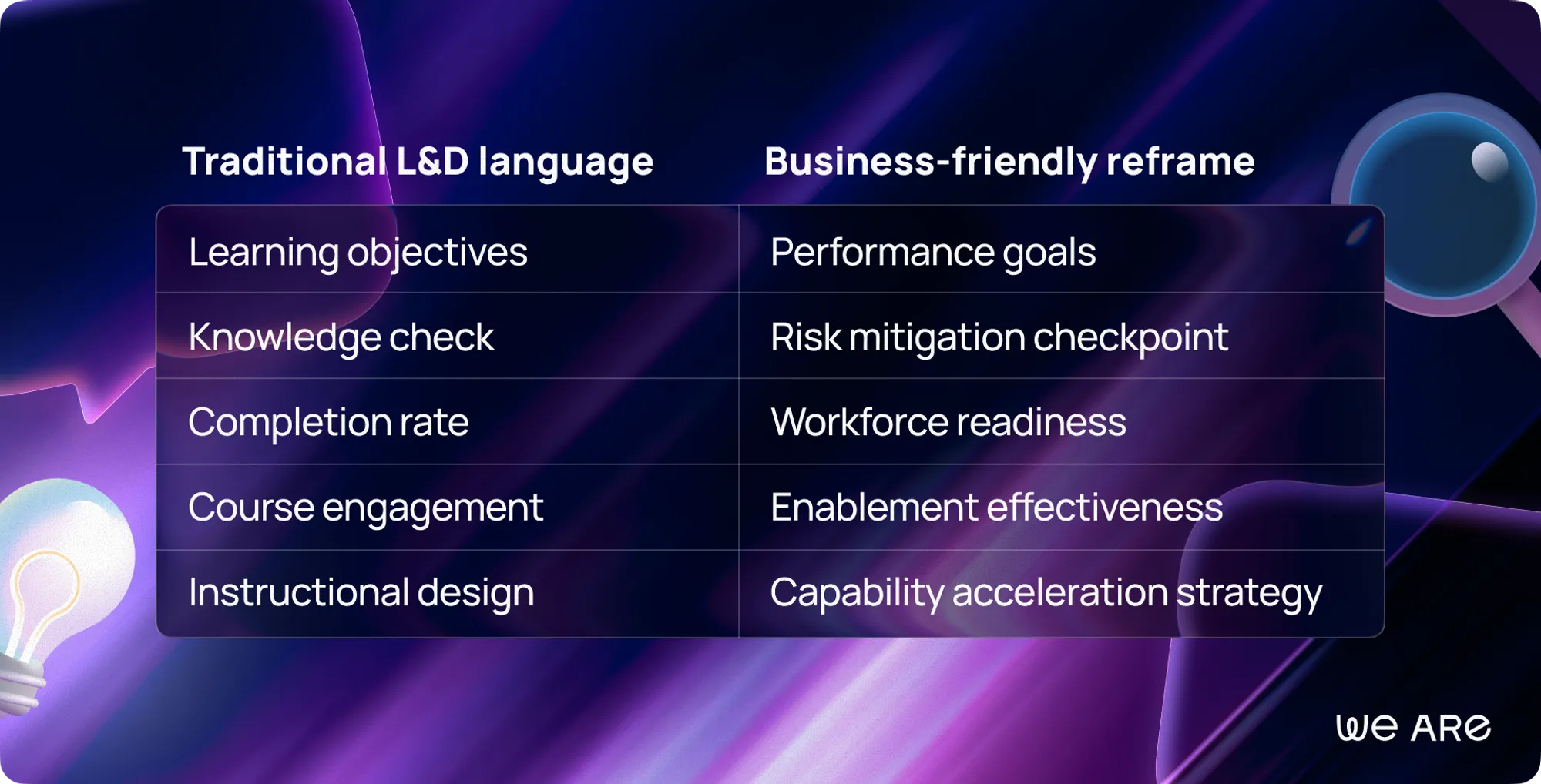
One of the biggest mindset shifts we can make is to see ourselves not as service providers, but as strategic enablers.
That shift happens in small, intentional ways:
This is at the core of what being a learning leader looks like. Being a learning leader doesn’t require a fancy title; it requires a mindset that sees learning not as the end product, but as the means to drive something bigger.
Our roots in learning theory and instructional design are what make us effective. But the impact we make is only fully realized when we connect those roots to the outcomes our organizations care about.
This idea sparked a lot of energy during our recent discussion, and for good reason; it’s one of the most important shifts L&D professionals can make.
So let’s not abandon pedagogy. Let’s connect it more deliberately to performance.
Let’s not water down our expertise. Let’s translate it into something others see the value in.
And most of all, let’s remember:
Learning isn’t the goal. Performance is. Learning is how we get there.
David Kelly constantly explores the convergence of learning and tech, demonstrating a profound commitment to transforming workplaces and enriching lives through innovative learning strategies. With 20+ years of experience in L&D leadership and consulting, he brings his passion to life in his daily work as a dynamic strategist, speaker, and writer, inspiring others to view their work through a fresh, tech-enhanced lens. He is the former Chairman and CEO of the Learning Guild.
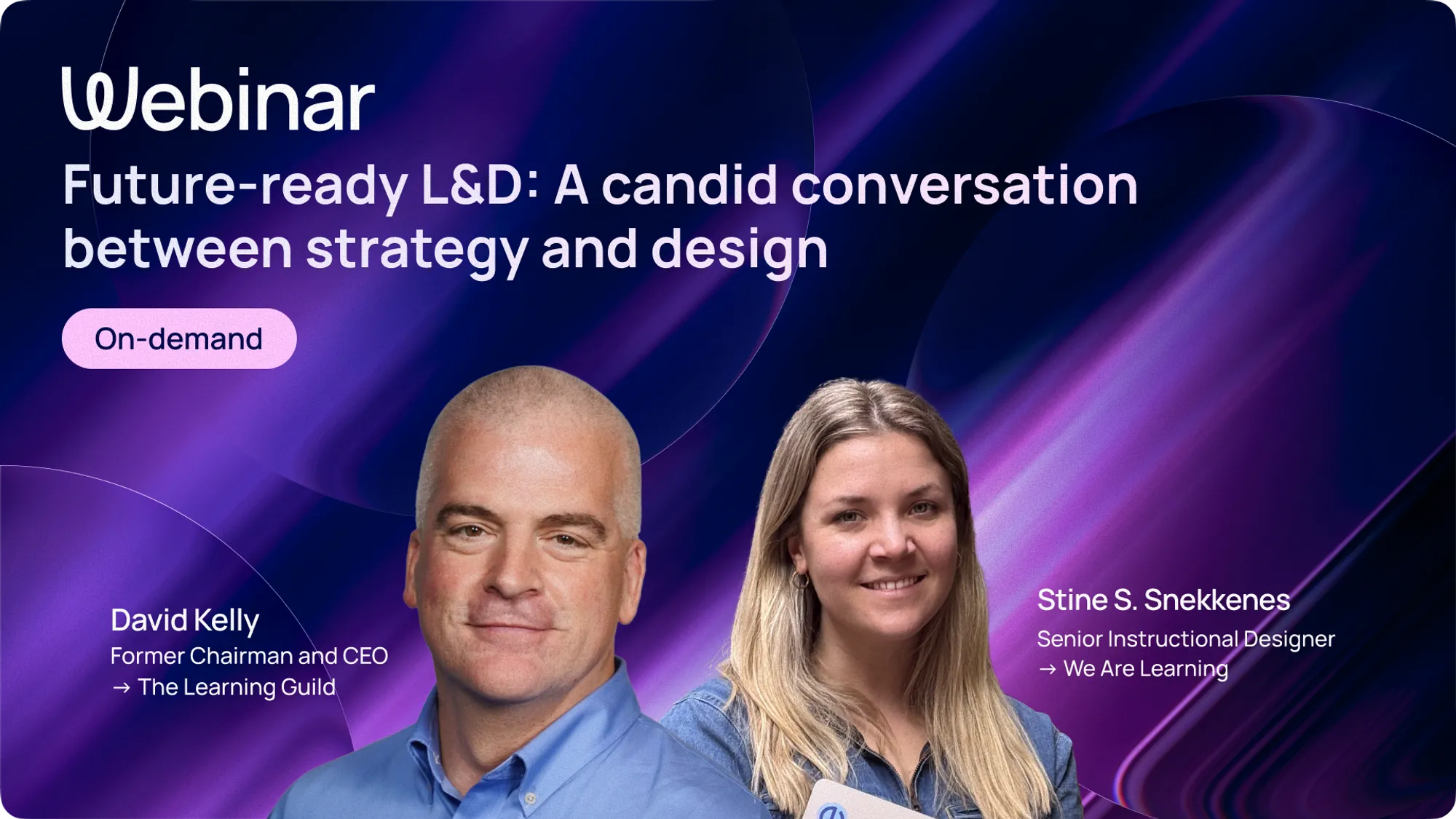
Missed the webinar? This was just one part from a conversation that touched on strategy, design, and even quick-fire questions (like what David would be doing if he wasn’t in L&D). If this sparked your curiosity, you can watch the full recording here.
Create learning that is anything but boring
Roleplay
Branching scenarios
3D characters
Upload PPT, PDF, DOCs
Quizzes
Hotspots
SOC2
Multiple languages
Branding and customization
AI video
SCORM
LMS
URL
Embed
Image to video
Talking avatars
Prompt AI assistant
Write your script